



CAROB
Latin name:
Ceratonia siliqua L.
Vernacular name:
Egyptian Fig Tree
Family:
Fabaceae
Origin:
French Riviera, Morocco
Part of the plant used:
Fruits (pods) and seeds
Description
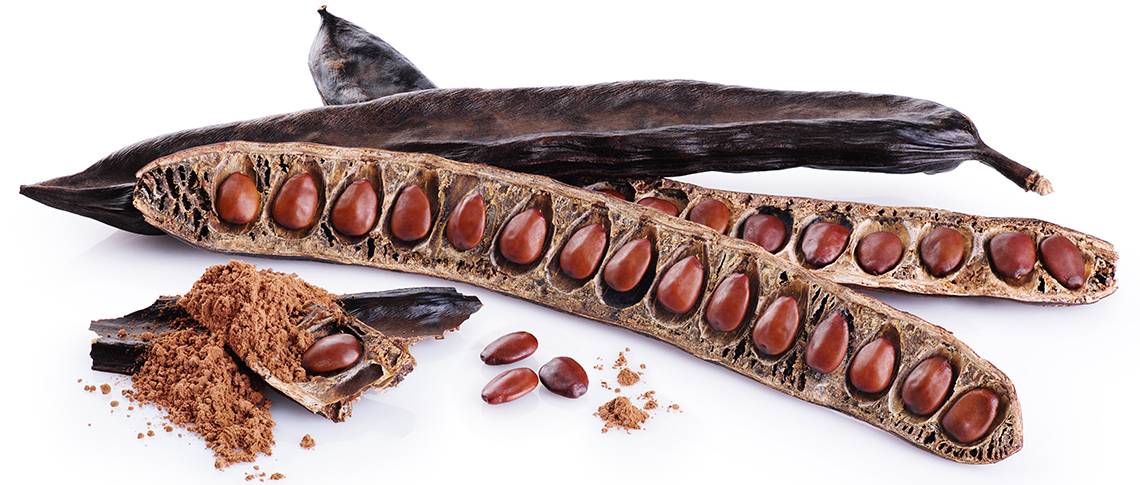
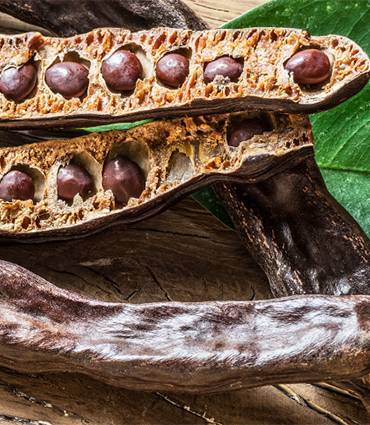
The carob tree is a tree 5 to 7 metres high. Its fruit, the carob, is a thick pod ten to thirty centimetres long containing about fifteen seeds.
In phytotherapy, the fruit and seeds of the carob are used to make a gum: carob gum. Moreover, a flour can also be obtained after drying and roasting the seeds.
Carob is composed of polyphenols, tannins, minerals and trace elements. The fruit also contains fibres, including pectins that protect the intestinal, gastric and oesophageal mucous membranes. These pectins form a gel that reduces the liquid character of the stool and has an anti-diarrhoea effect.
The benefits
- The carob is a pod that contains seeds composed of pectins. These fibres trap water and form a gel, giving the carob anti-diarrhoea properties. The carob contributes to digestive comfort.


