



Vitamin B1
Chemical name:
Thiamine
Description
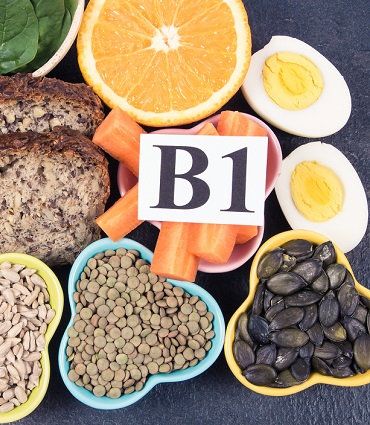
This is a water-soluble vitamin. The human body cannot synthesize or store it. The recommended daily intake of vitamin B1 is 1.1 mg. The main food sources of thiamine are white meat (pork: 0.7 mg/100 g), whole grains and vegetables (cereals: 2.3 mg/100 g), fruits and seeds (hazelnuts: 0.5 mg/100 g). According to some studies, 60% of the French population has a vitamin B1 deficiency..
The benefits
Vitamin B1 is essential to the different aspects of the body in general, particularly that of carbohydrates - it thus allows the assimilation and use of sugars - and that of lipids, by encouraging the assimilation and use of fats and proteins by the body.
Vitamin B1 thus contributes to:
- A normal energy metabolism;
- The proper functioning of the nervous system (it is involved in the transmission of nerve impulses);
- Normal psychological functions (it stimulates certain brain functions such as memory and attention by combating irritability);
- Normal heart functions.


